
Moving to Florida
Moving to Florida This Winter from Maine
Travis Penny, Senior Mortgage Broker · 2026-11-18 · 8 min read
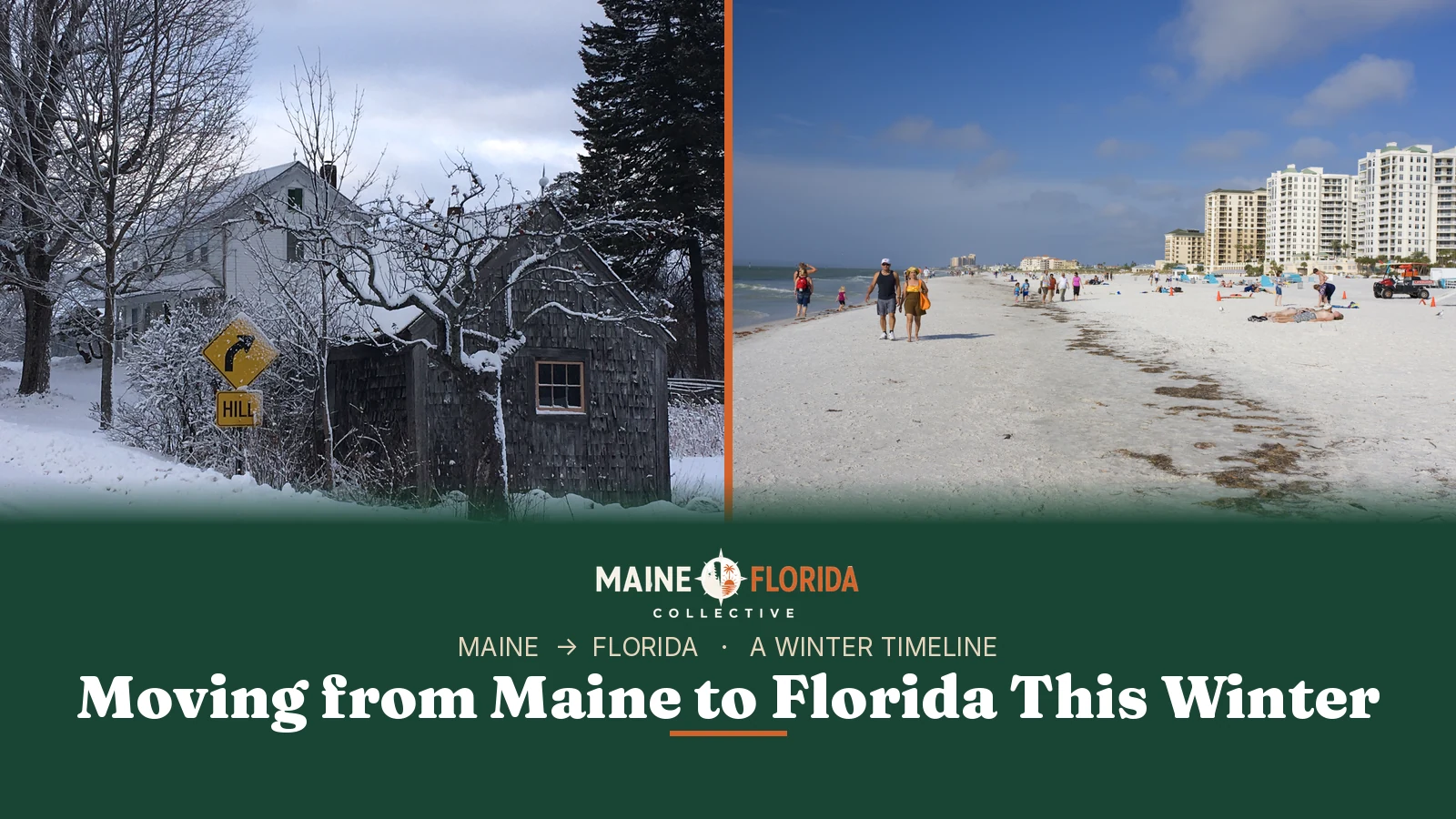
Moving to Florida this winter starts with two dates: Florida's January 1 homestead rule and the rest of a Maine heating season. I help you work the sell-or-buy sequence backward from those dates, with Deja Lett on the Maine side and Dewey Deals in Florida.
Why does moving to Florida this winter still have a cost in Maine?
Many Maine homes are still heated with oil. As of the week of November 16, 2026, the U.S. Energy Information Administration reported a Maine residential heating-oil price of $5.686 per gallon, excluding taxes, in data released November 18, 2026. The Maine Department of Energy Resources, which surveys cash prices from delivered-fuel retailers statewide, put the statewide average at $5.84 a gallon as of November 9, 2026. Those are official per-gallon prices, not a bill for your house. What you actually spend depends on the home, the system, and the winter. It is still a line item you can stop paying if you are no longer there.
If you want town-level housing cost estimates, use the cost compare tool. Those figures are estimates for education, not a price you can take to a closing. A February surprise, paying to heat a house you already meant to leave, is what I am trying to help you avoid.
What is the January 1 deadline when moving to Florida?
Florida's homestead exemption is not automatic, and it is not based on the day you apply. The Florida Department of Revenue's homestead guide, PT-113, is direct: if a person purchases a property and makes it his or her permanent residence by January 1, and files the application with the county property appraiser, he or she may be eligible for that tax year. The application, Form DR-501, is due to the county property appraiser by March 1 of the tax year.
The exemption can reduce taxable value by as much as $50,000. The first $25,000 applies to all property taxes, including school district taxes. An additional exemption of up to $25,000 applies to assessed value over $50,000 and only to non-school taxes, and that additional amount is adjusted annually on January 1 for inflation when the CPI change is positive. Only the county property appraiser decides whether a property qualifies. See the Department's property tax exemptions page and PT-113 for the official rules.
Here is the honest part of a mid-November start. January 1, 2027 is about six weeks away. If the Maine house is not listed and there is no Florida contract, making that date as a permanent-resident owner is often a stretch. I will not pretend otherwise. Missing January 1, 2027 does not end the plan. It usually means the exemption, if you qualify, would apply in a later tax year, commonly the year after you own and occupy the home on January 1. Starting now still does three useful things: it can shorten the rest of this heating season if the dates work, it puts a real sequence on paper, and it gives you a cleaner shot at being in the Florida house, as your permanent residence, by January 1, 2028.
If the Florida place would only be a snowbird stay, the homestead facts are different, because homestead is built around a permanent residence. Run the snowbird plan first.
Should you sell in Maine first when moving to Florida?
This is the sequence question, and winter makes the carrying cost more obvious. Buying the Florida home first can get you out of a Maine winter sooner. The tradeoff is two housing bills at once, including the cost of keeping the Maine house warm enough while it is listed or waiting to close. Selling first can unlock the equity. The tradeoff may be a short-term place in Maine, or a hurried Florida offer, in the middle of winter.
Neither order is automatically correct. What you can fund, what cash you will have left, the dates in the contracts, and whether Florida will be your permanent home all change the answer. The financing options are laid out on buy Florida before selling Maine. Cash, reserves, and insurance belong in the guide to moving to Florida financial planning. Here, the point is to pick an order against a winter calendar, not after the first storm has already arrived.
A licensed Maine agent has to market the house you have. A licensed Florida agent has to find the house you want. Deja and Dewey already work those two ends together, so the listing date and the purchase date are not invented in isolation.
What does a mid-November timeline for moving to Florida look like?
Work backward from the date you actually need to be in Florida, and from January 1 if homestead is part of the plan. A useful winter order looks like this.
First, a conversation with the three of us about full-time versus snowbird, the Maine house, and the Florida area. Take the quiz if you are still choosing a path, or get started now and the note emails me, Deja Lett, and Dewey Deals together.
Second, a sequence decision: buy first, sell first, or a version of both with dates you can actually fund. That is a financial decision. It is not a packing decision.
Third, the Maine listing work with Deja and the Florida search with Dewey. Video tours and a short Florida trip are both normal. I do not invent how many days a Maine house will sit in January. What I will do is start the mortgage file when the plan is real, not the week you want keys.
Fourth, the loan. On a Florida purchase I originate, files that are complete enough to underwrite have averaged 11.2 business days to clear-to-close. Coordinating a Maine closing with a Florida closing can push the move itself past that window. Paperwork tied to a Maine sale often shows up in the file. I would rather have it at the start.
Fifth, closing, the move, and, if the Florida home is your permanent residence, the homestead application to the county property appraiser by March 1 of the tax year you are claiming.
If those steps do not fit inside this calendar year, we still start them. A late-winter or spring arrival that you can fund is better than a January date that only works on a napkin. The larger relocation overview lives on the Maine to Florida guide. Town-by-town figures live in cost compare. The cash and reserve plan lives in the financial-planning guide.
Frequently asked questions
Can I still get a Florida homestead exemption if I move after January 1?
Eligibility for a given tax year is tied to owning the home and making it your permanent residence by January 1 of that year, then filing with the county property appraiser, generally by March 1. If you arrive after January 1, 2027, you would usually be looking at a later tax year, commonly once you own and occupy the home on a later January 1. Confirm the facts with the county property appraiser and the Florida Department of Revenue's PT-113 guide.
How much does it cost to heat a Maine home this winter?
I will not invent a household total. Official sources publish fuel prices, not your bill. The EIA's Maine residential heating-oil price for the week of November 16, 2026, was $5.686 per gallon, excluding taxes. Maine DOER's statewide average cash price as of November 9, 2026, was $5.84 per gallon. Your cost depends on the house and the system.
Should I sell my Maine house before I buy in Florida this winter?
Look at equity, leftover cash, and the dates you can actually keep. Buying first can shorten a Maine winter and raise the cost of carrying two places, including heat. Selling first can unlock equity and open a gap between homes. Read the options on the buy-Florida-before-selling-Maine page, then we will choose an order you can fund.
How long does the mortgage take if I want to move this winter?
Files I originate, once they are complete enough to underwrite, have averaged 11.2 business days to clear-to-close. The move as a whole can run longer than that, because a Maine sale and a Florida purchase have to land in an order that works. I open the file when the plan is real.
Ready to plan your winter move?
Take the quiz or get started now and the note goes to me, Deja Lett, and Dewey Deals. I am Travis Penny, Senior Mortgage Broker, NMLS 1649161 | Vision Mortgage NMLS 1286953. I started in 2004 and I'm still here.
Or call (207) 615-7770
This page is for education only. It is not tax advice, an insurance quote, or an offer to lend.